
The best discounts this week
Every week you can find the best discounts here.
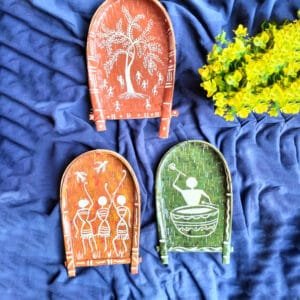
Special Warli Art | Tribal Village Art | Decorative Bamboo Kula | Home Decor | Handpainted | Wall Hanging Handicraft | 8 inch | Combo Set of 3
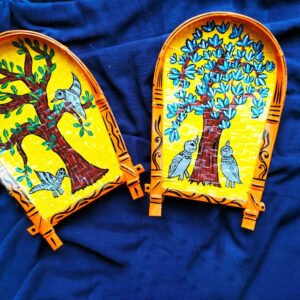
Gond Art Decorative Bamboo Kula – Tree Art | Home Decor | Handpainted | Wall Hanging Handicraft | 8 inch | Combo Set of 2

Madhubani Fish Art Decorative Bamboo Kula | Home Decor | Handpainted | Wall Hanging Handicraft | 8 inch | Combo Set of 2
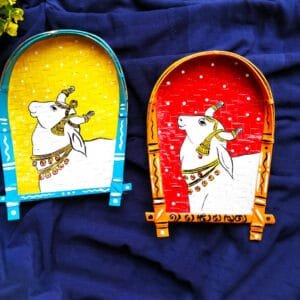
Special Pichwai Cow Decorative Bamboo Kula | Home Decor | Handpainted | Wall Hanging Handicraft | 8 inch | Combo Set of 2

Special Gond Art Decorative Bamboo Kula – Animal Art | Home Decor | Handpainted | Wall Hanging Handicraft | 8 inch | Combo Set of 2
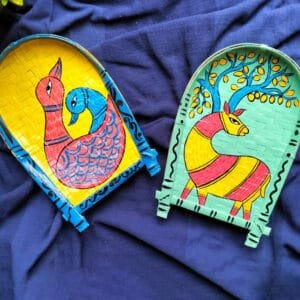
Gond Art Decorative Bamboo Kula – Animal Art | Home Decor | Handpainted | Wall Hanging Handicraft | 8 inch | Combo Set of 2
Unveiling the Craft: How a Kulo is Made From Bamboo in Bengal
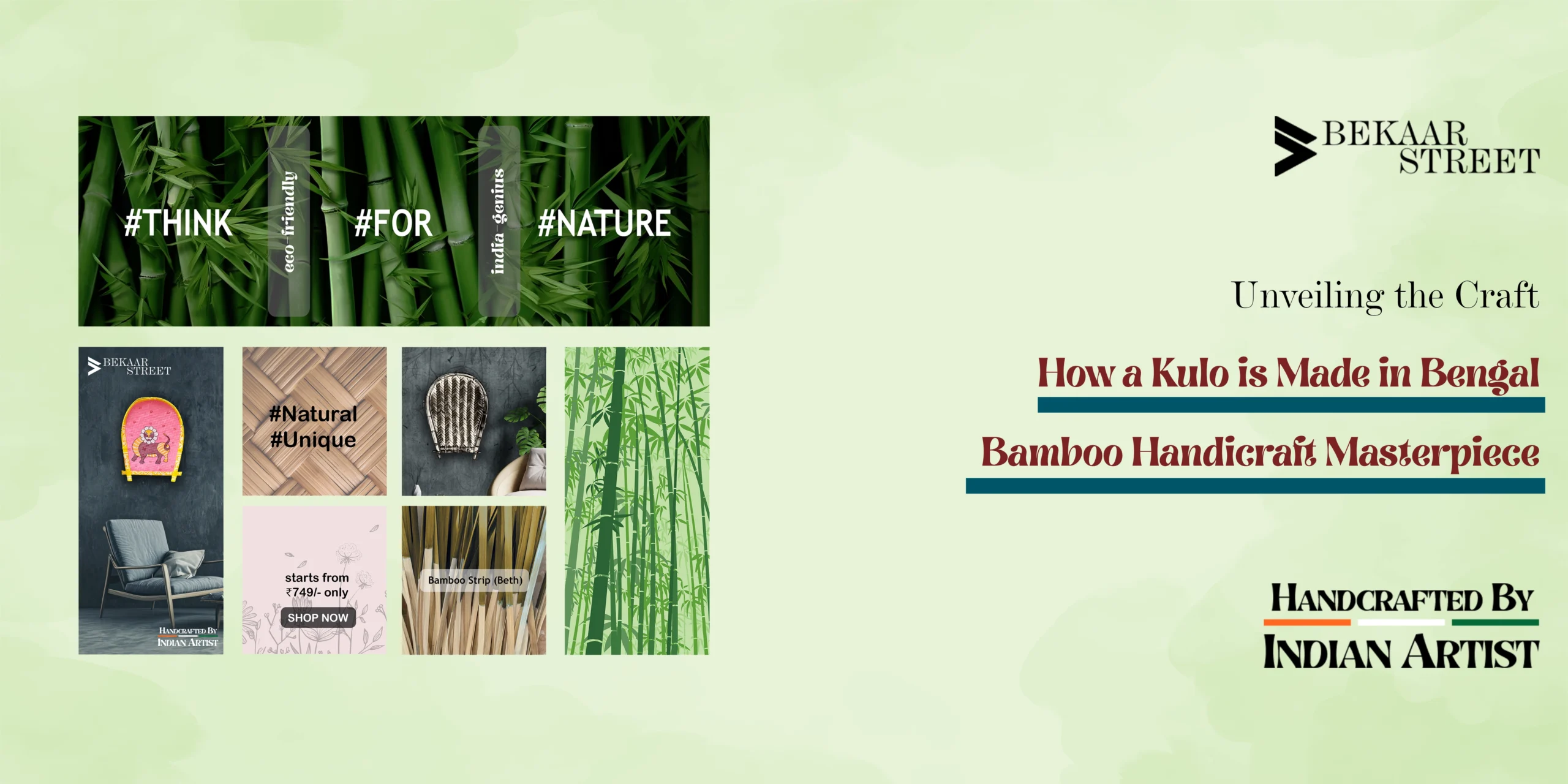
Discover unique, handcrafted & authentic decorative BAMBOO KULO at BekaarStreet.com.
Imagine holding a basket so imbued with history it whispers tales of generations past. A basket that carries not just objects, but the very essence of a culture woven into its every strand. This is the magic of the Kulo, a handcrafted bamboo basket deeply rooted in the traditions of Bengal.
More than just a utilitarian object, the Kulo is a testament to the artistry and cultural heritage of Bengali artisans. Its intricate patterns, born from generations of knowledge and skill, speak volumes about the region’s deep connection to nature and its vibrant artistic spirit.
Table of Contents
The Journey of a Kulo: Step-by-Step
Step 1: Nature’s Bounty:
Our voyage begins in the verdant bamboo forests of Bengal. Artisans select their raw materials with discerning eyes, seeking specific varieties like “muli” and “betua,” prized for their flexibility and strength. These stalks, nurtured by nature, are the foundation of sustainable home decor.
Step 2: Tools of Tradition:
In the artisan’s workshop, tools bearing the patina of countless creations take center stage. The curved “dao” knife expertly splits the bamboo, while the flat “shal” scraper smoothens rough edges. Fire dances in the “chul,” bending the bamboo to the artisan’s will, ensuring it is ready for the handicraft making process.
Step 3: Preparing the Canvas:
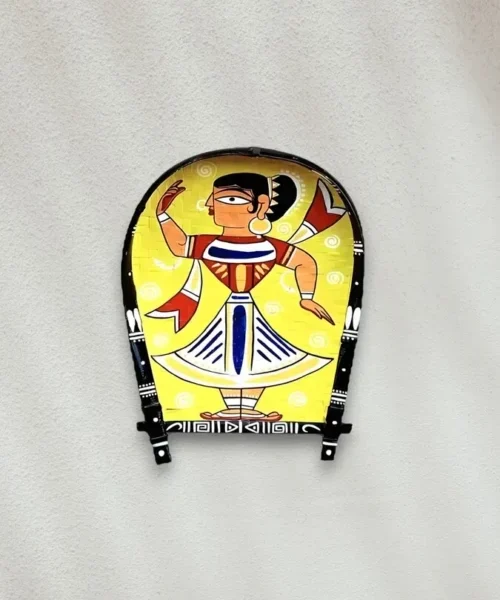
Sun-drying infuses the bamboo with a golden hue, while natural soaking enhances its durability. In the realm of Bharat Art, this preparation is vital. Whether it is for Madhubani Art or intricate Jamini Roy paintings, the bamboo must be a perfect, resilient canvas.
Step 4: Weaving Wonders:
Now, the true magic unfolds. Nimble fingers dance, weaving bamboo strands into intricate patterns. Simple twining forms the sturdy base, while intricate coiled weaves create mesmerizing geometric designs. These unique techniques, passed down through generations, are like languages spoken in bamboo, echoing the cultural heritage of Bengal.
Step 5: Patterns with Meaning:
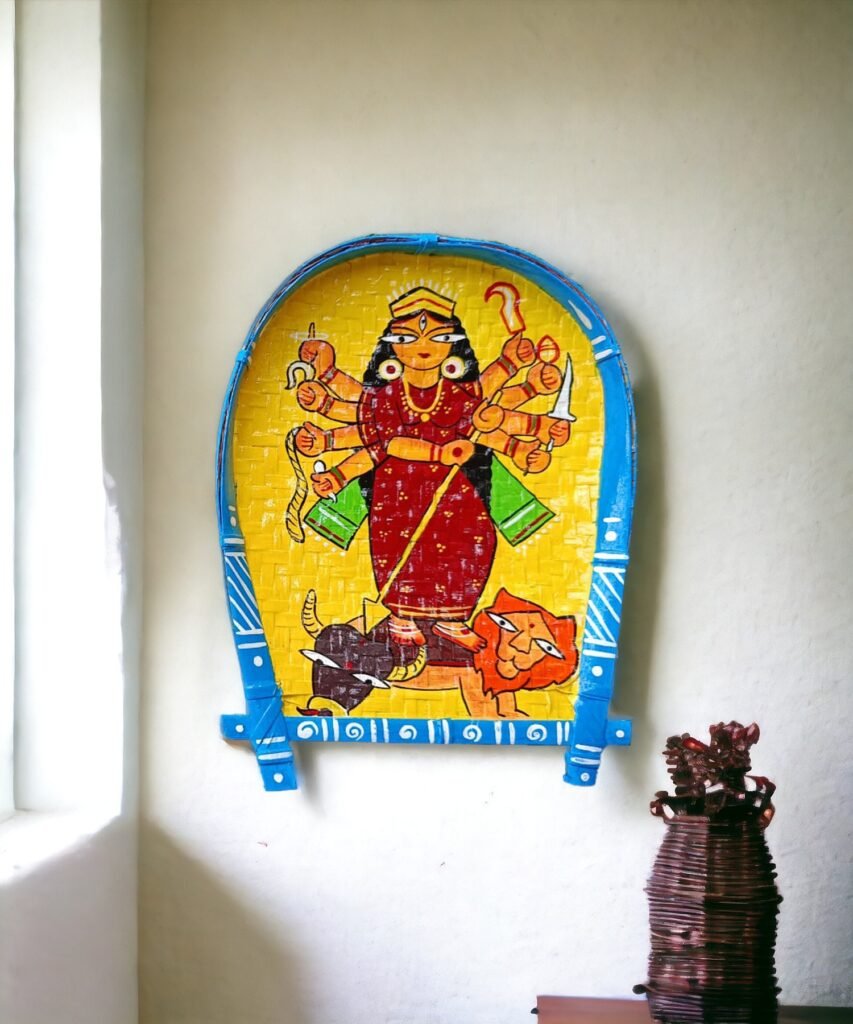
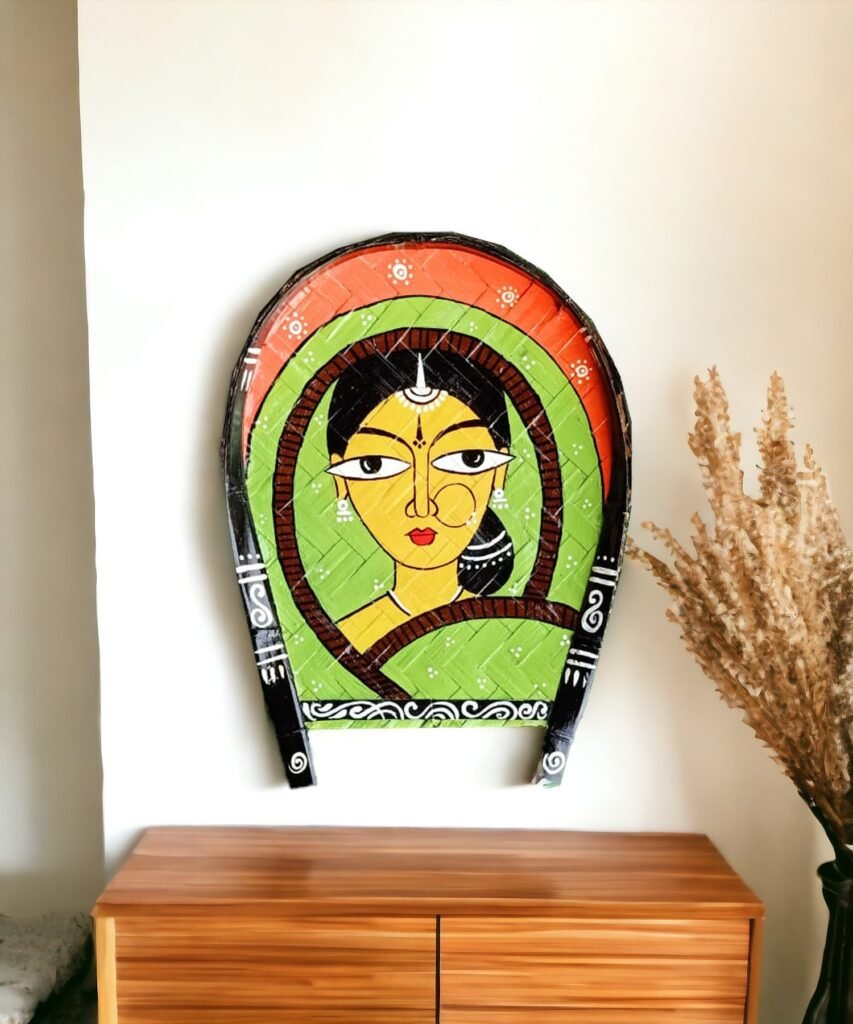
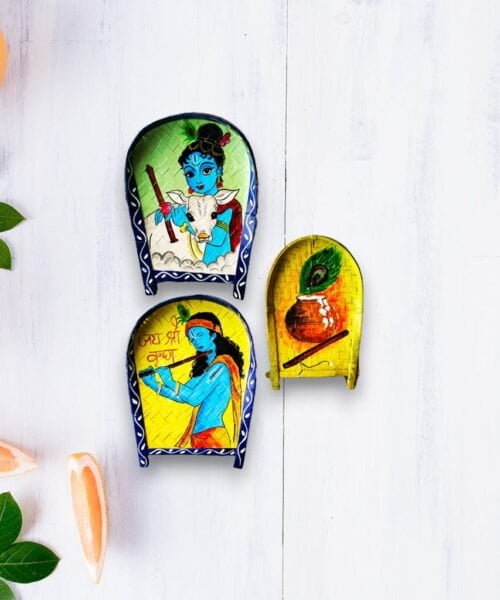
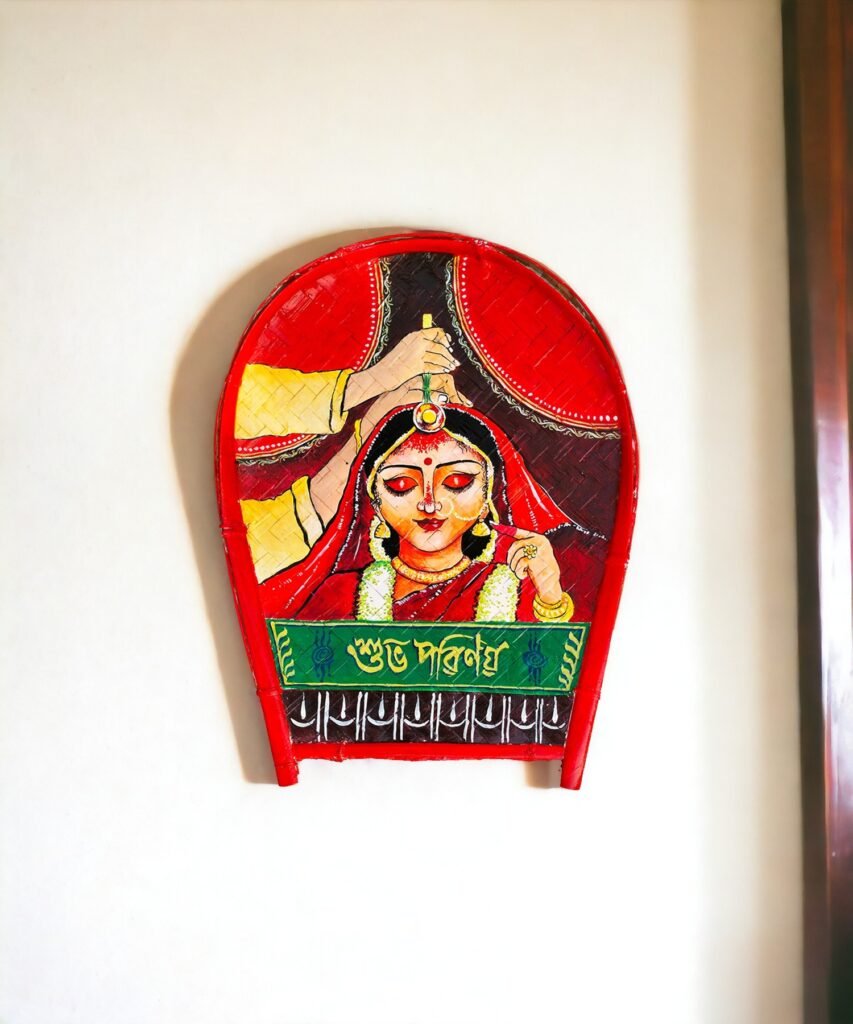
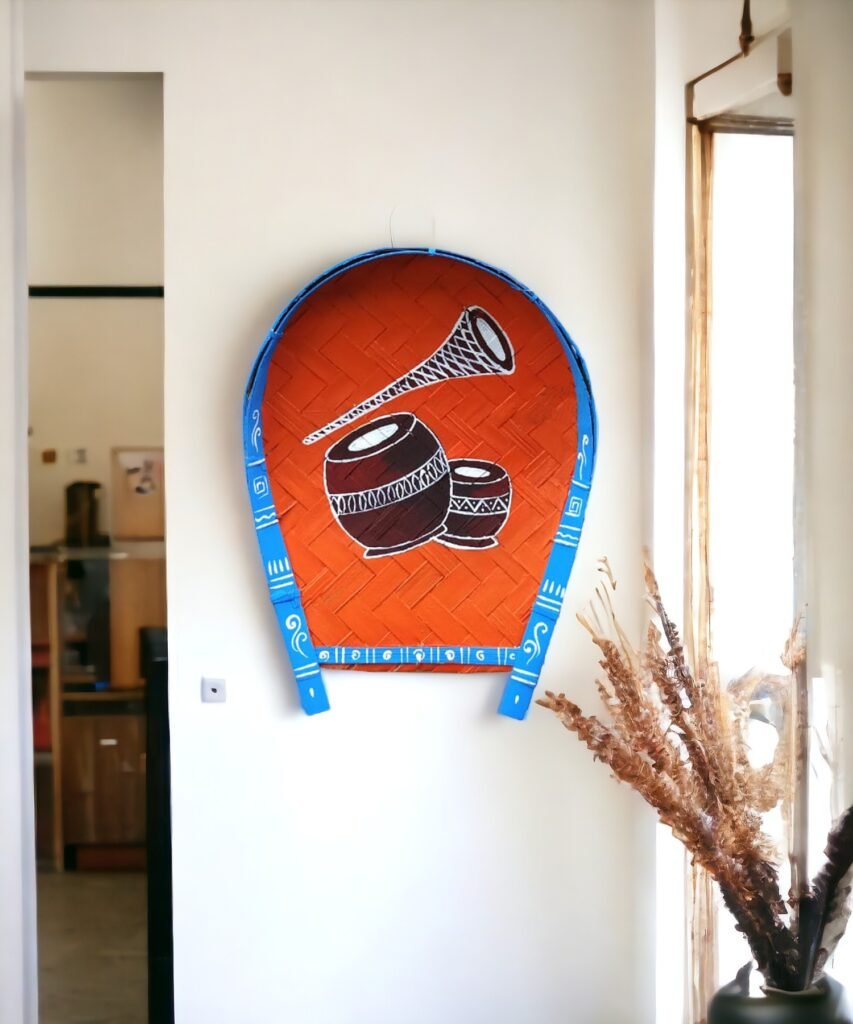
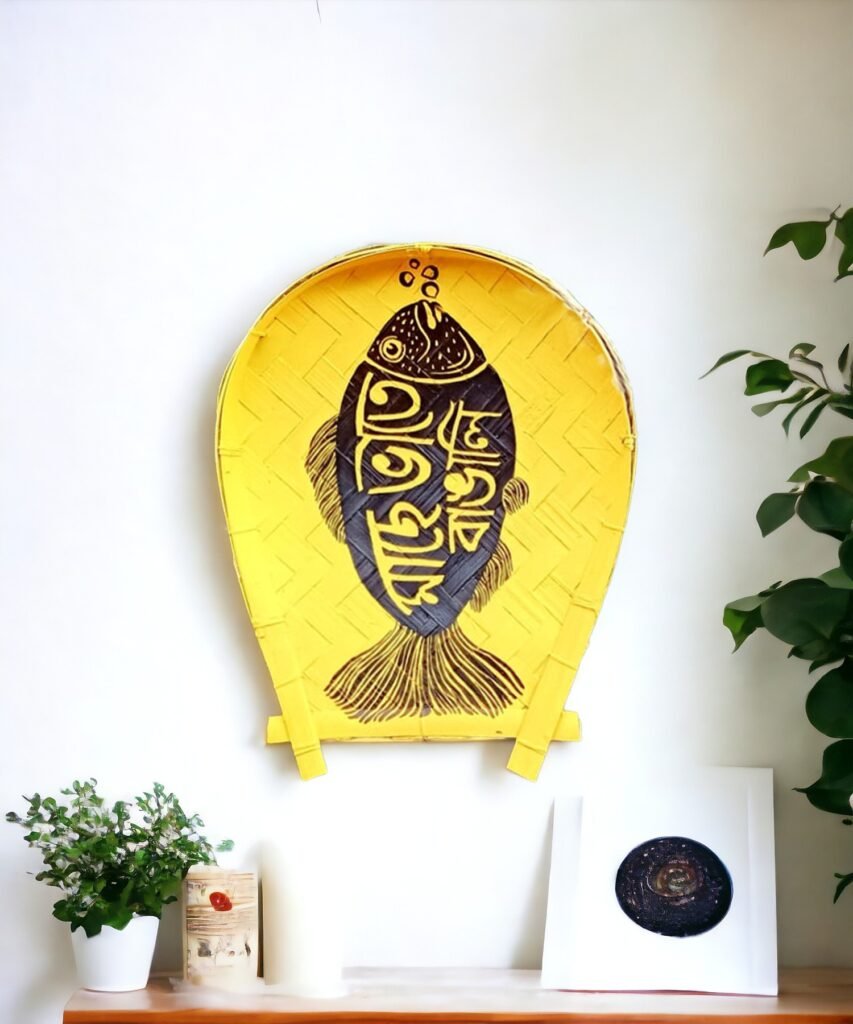
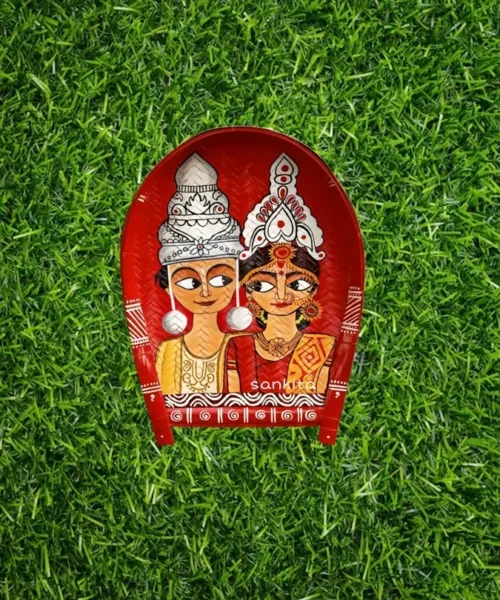
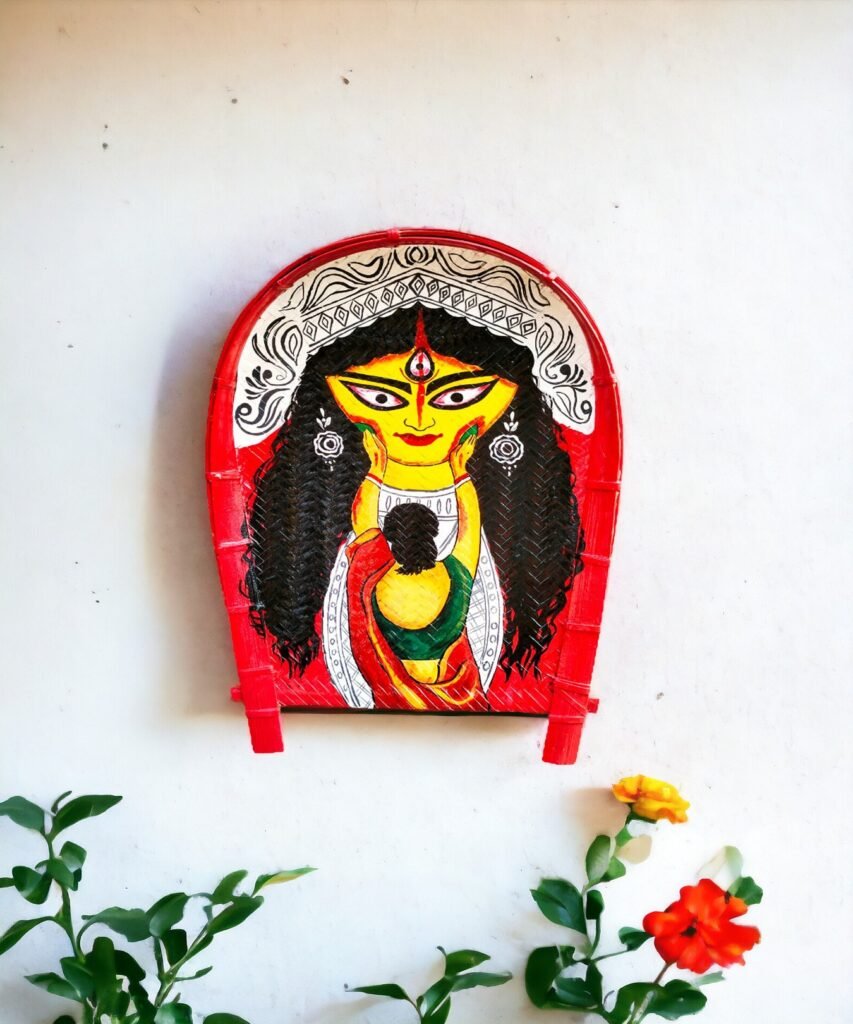
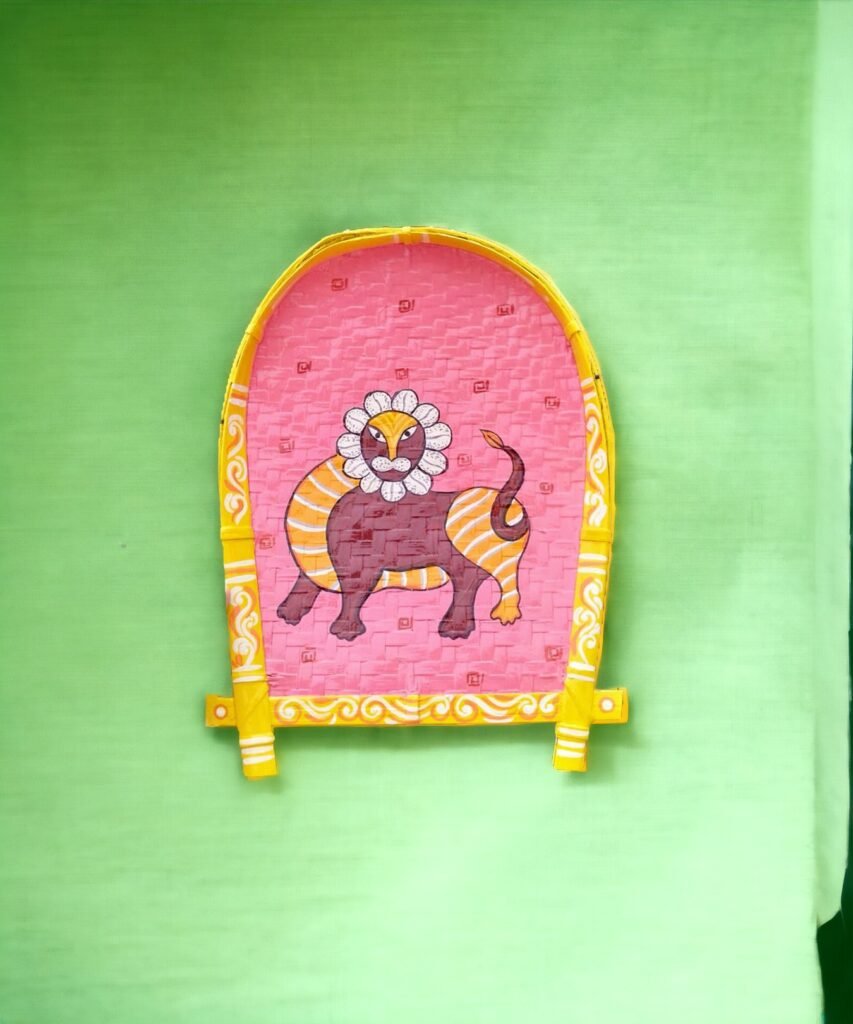
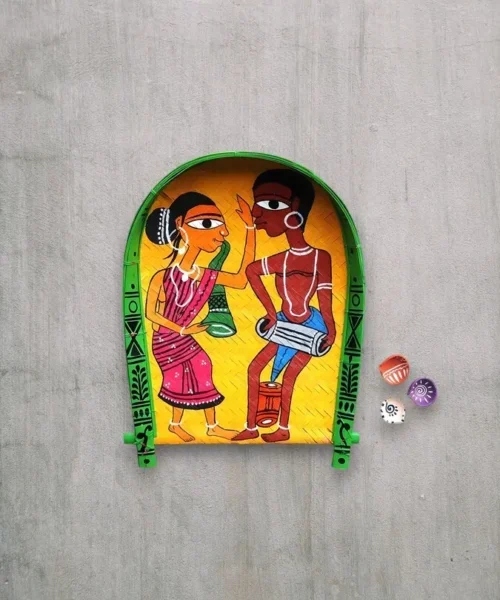
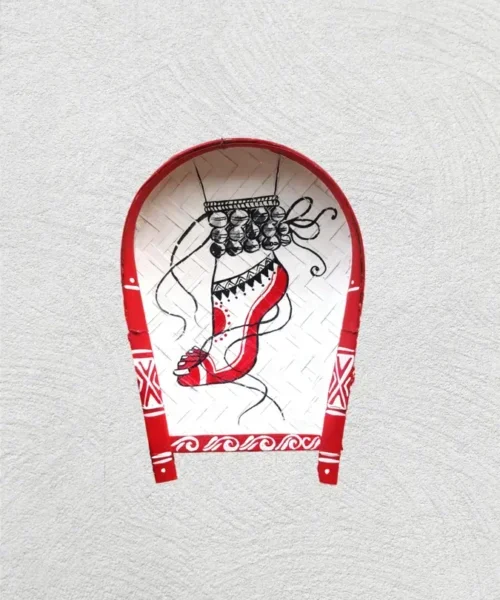
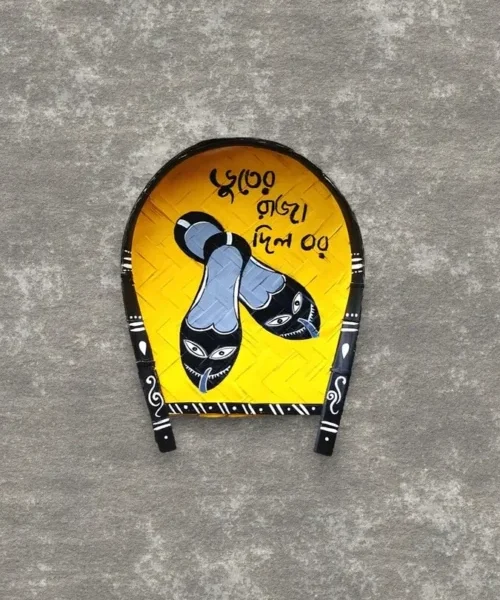
Kulo designs are visual narratives. Geometric shapes symbolize abundance, while a swirling fish motif whispers of the region’s fishing heritage. Whether it depicts Lord Krishna, a Pichwai Cow, or Maa Durga, each pattern weaves a profound meaning into the fabric of your Living Room decor.
Step 6: A Symphony of Creation:
Unlike mass-produced uniformity, each Kulo is a unique masterpiece. It is a testament to the slow, mindful craftsmanship that defies the fast-paced rhythm of modern life. When you hold a Kulo, you hold the whispers of generations past and the vibrant spirit of Bengal.
The Legacy Woven Within:
The journey of a Kulo is more than just a process; it’s a celebration of heritage, skill, and cultural identity. Each basket holds the whispers of generations past, the stories of skilled hands, and the vibrant spirit of Bengal. So, the next time you hold a Kulo, remember the dedication, the artistry, and the legacy woven within its every strand. It’s not just a basket; it’s a piece of cultural heritage, a reminder of the beauty and value of handcrafted traditions.
This is just a glimpse into the captivating world of eco-friendly Kulo making. Explore deeper by visiting Bekaar Street, where you can discover more about this craft and connect with artisan communities directly. Let’s support traditions, appreciate the time and skill behind handcrafted objects, and celebrate the stories woven into Kulo wonders. This process is a core part of the Indian handicraft tradition.
Use Coupon Code: HANDICRAFT at checkout to avail up to 35% OFF!


3 thoughts on “Unveiling the Craft: How a Kulo is Made From Bamboo in Bengal”
Highly informative. Supporting local talent and sustainable fashion for home decor has never felt more rewarding. Great work preserving our culture, Bekaar Street!
Brilliant storytelling! It’s rare to find such detailed insights into Bengali folk art. This guide makes these eco-friendly wall hangings the perfect meaningful gift.
I love how this post highlights the “Artist vs. Machine” aspect. Seeing the intense labor behind the bamboo splitting proves these are true heritage pieces.